Saturday, February 10, 2007

Tobacco, tobacco tobacco

Three recent articles on tobacco. First, The Boston Globe reports on the effectiveness of pharmacological treatments for nicotine addiction. The article presents a pretty pharmacological treatments as an essential part of a smoking cessation plan.
Philip Quartier, a 64-year-old stockbroker from Mission Hill, had been smoking a pack of cigarettes a day for 45 years when he quit for the first time. After five clean years, an impulse led him to pick up another cigarette eight months ago, and the biking enthusiast, who has lung disease, was frustrated to be back to his old habit.

Determined to quit for good, he dug out the subliminal motivation tapes he'd used the first time around, went back on the nicotine patch, bought a self-help book, and joined a counseling group, but several months into the process, he was getting nowhere. So in November, he got a prescription for Chantix (varenicline), a six-month-old drug that is the first new quit-smoking treatment in a decade.

The pills don't work for everyone but quickly diminished Quartier's cravings. "By the eighth day I was absolutely ready" to give cigarettes up again, he said.

Though most smokers try to quit without help, nicotine-free treatments including Chantix and longtime staples like nicotine gum and patches are more effective than trying to quit "cold turkey," according to experts and research.

Next, Dr. Wes questions the federal push toward pharmacological treatments and provides some compelling arguments:
Well it seems that nicotine patches are now part of the federal guidelines regarding smoking cessation issued by the Public Health Service, a division of the Department of Health and Human Services. But an interesting twist to these guidelines was revealed yesterday (WSJ, subscription):
(Doctor) Michael Fiore is in charge of revising federal guidelines on how to get smokers to quit. He also runs an academic research center funded in part by drug companies that make quit-smoking aids, and he personally has received tens of thousands of dollars in speaking and consulting fees from those companies.
...
Dr. Fiore, a University of Wisconsin professor of medicine, headed the 18-member panel that created those guidelines. He and at least eight others on it had ties to the makers of stop-smoking products.

Those opposed to urging medication on most quitters note that cold turkey is the method used by the vast majority of former smokers. They fear the federal government's campaign could discourage potential quitters who don't want to spend money on quitting aids or don't like the idea of treating their nicotine addiction with more nicotine.

"To imply that medications are the only way is inappropriate," says Lois Biener, a senior research fellow at the University of Massachusetts at Boston who has surveyed former smokers in her state. "Most people don't want them. Most of the people who do quit successfully do so without them."
What is interesting is the way the government makes these recommendations: based on clinical trials. And who is better equipped to perform clinical trials than drug companies? (Bias 1). Further, all of the individuals in clinical trials must sign consent, and therefore have to be willing to take a drug (Bias 2). So these "clinical trials" are, by their very nature, skewed toward those willing to take a drug.

But in the interest of revealing effectiveness of these smoking cessation drugs in the real world, another type of study, an observational population trial that looks at all comers to the smoking cessation party, found this:
Studies of quitters outside clinical trials have shown no consistent advantage for medicine over cold turkey, the pharmaceutical industry's primary competitor. An unpublished National Cancer Institute survey of 8,200 people who tried quitting found that at three months, users of the nicotine patch and users of bupropion (Wellbutrin) remained abstinent at higher rates than did users of no medication. But at nine months, the no-medication group held an advantage over every category of stop-smoking medicine. The study was presented at a world tobacco conference last summer.
Finally, a recent Biological Psychiatry commentary addresses the links between alcohol and nicotine addiction, including the genetic links, shared neurobiological mechanisms, shared behaviors and treatment.
Epidemiologic data confirm that: (1) heavy drinking may stimulate smoking; (2) cessation of smoking may enhance abstinence from alcohol; and (3) combined treatment for dual addiction may achieve the most beneficial treatment outcome.

Teen drinking laws update

A couple of weeks ago I posted about laws that allow teens to drink with their parents and asked for info on Michigan law. Brian, a student of mine who is also a juvenile probation officer sent this:
I checked into the laws governing underage drinking related to parents here at the courthouse. There are no laws that allow for parents to let their kids drink in any circumstance. However, there are limited exceptions. One is allowed for religious purposes in a religious setting. Another is for educational purposes like in a culinary class for cooking. If a parent provides or allows a kid to drink they can be charged with contributing to the delinquency of a minor or furnishing alcohol to a minor.
Thanks Brian!

Friday, February 09, 2007

Charity records 13% rise in post-Christmas abortions

A publicity seeking stunt? Or, a little mentioned harm associated with excessive drinking?
The family planning service Marie Stopes International said today that it performed a record number of UK abortions last month.

The charity carried out nearly 6,000 abortions at its nine centres across the UK in January, the highest number in its 32-year history. This was a rise of 13% on January last year.

The charity's UK director, Liz Davies, blamed the surge in abortions on excess drinking over the Christmas season.
[Hat tip: New Recovery]

Three takes on weed

First, USA Today did it's best to create the impression that there is still a raging debate about marijuana and the gateway theory:
Most users of more addictive drugs, such as cocaine or heroin, started with marijuana, scientists say, and the earlier they started, the greater their risk of becoming addicted.

Many studies have documented a link between smoking marijuana and the later use of "harder" drugs such as heroin and cocaine, but that doesn't necessarily mean marijuana causes addiction to harder drugs.

"Is marijuana a gateway drug? That question has been debated since the time I was in college in the 1960s and is still being debated today," says Harvard University psychiatrist Harrison Pope, director of the Biological Psychiatry Laboratory at Boston's McLean Hospital. "There's just no way scientifically to end that argument one way or the other."

That's because it's impossible to separate marijuana from the environment in which it is smoked, short of randomly assigning people to either smoke pot or abstain — a trial that would be grossly unethical to conduct.

"I would bet you that people who start smoking marijuana earlier are more likely to get into using other drugs," Pope says. Perhaps people who are predisposed to using a variety of drugs start smoking marijuana earlier than others do, he says.

Besides alcohol, often the first drug adolescents abuse, marijuana may simply be the most accessible and least scary choice for a novice susceptible to drug addiction, says Virginia Tech psychologist Bob Stephens.

No matter which side you take in the debate over whether marijuana is a "gateway" to other illicit drugs, you can't argue with "indisputable data" showing that smoking pot affects neuropsychological functioning, such as hand-eye coordination, reaction time and memory, says H. Westley Clark, director of the Center for Substance Abuse Treatment at the Substance Abuse and Mental Health Services Administration.

The article ends up hedging its bets and qualifies just about everything she says. I find it hard to argue with the facts presented, but the emphasis and the selective inclusion suggest that the writer might be guilty of hype.

Next, a Canadian publication advocates legalizing and regulating marijuana:
Because of crimes that are related to the drug trade—most notably the killing of the four police officers in Mayerthorpe two years ago—many have been pushing for increased punishment for drug-related crimes recently. While a tactic such as increased jail time would theoretically make criminals think twice before becoming involved in the trade, there’s no statistical evidence that supports this claim.

The fact remains that it’s just too profitable an industry to be deterred by harsher punishment. Instead we need to end this failed experiment called prohibition and regulate most, if not all, drugs.

...The regulated sale of drugs would mean that one of the biggest dangers of drug use, drugs that are laced with more dangerous substances, would be systematically eliminated. As well, it would allow people to find a more accurate description of what they are taking, what it does to them, recommended doses and possible negative side effects. A more honest approach on the effect of these drugs would work better than just saying that drugs kill.

If there’s a demand for illicit drugs, like any other product, why should criminal elements be the ones who profit from it? Marijuana, for example, is more profitable than any other crop in Canada. Instead of letting criminals sell it, using the profits for other nefarious purposes, why doesn’t the Canadian government make it and sell it, eliminating the criminal element in the process? People are still going to buy it either way, after all.
Variations of this proposal a published frequently. At least this version eliminates profit potential. Most versions of this proposal suggest legalizing and regulating private sale, which raises the specter of a marijuana industry with the promotional and lobbying power of the alcohol and tobacco industries. While all variations of legalization models have an uphill battle, one that puts the government in the role of manufacturer and sales seems DOA.

Finally, STATS was riled by the USA Today article. They make several strong rebuttals to the points in the USA Today - if there is a gateway drug it's alcohol; alcohol causes more harm; there's lots of evidence against the gateway theory; most marijuana users experience little or no harm, etc. However, she also inserts her bias and misrepresents the USA Today article:
So, where’s the evidence that marijuana is more harmful than other substances?
The USA Today article didn't argue that marijuana is more harmful, just that it's not harmless. There were enough problems with the article that the straw man tactics we're needed.


Ultra Abstinence Approach?

I'm glad I'm not a drug addict in Ireland:
Two doctors specialising in treating substance abuse in Dublin have called for new thinking in treatment services and say doctors need to be aware that the evidence-base shows that abstinence in opiate drug addiction treatment does not work.

...Dr Quig­ley believes some doctors take an “ultra abstinence approach” which doesn’t necessarily work in drug addiction.

Says Dr Quigley: “As we have gone along with the metha­done programme we have abandoned some previous processes like attempting to pressure addicts to detox. On the basis of medical evidence, that just doesn’t work and creates more difficulties.”

Dr McGovern supports this view: “Unfortunately, evidence doesn’t support this [abstinence] approach and very few would remain free of opiates, and with any illicit substance, relapse is the norm.”

Both doctors say most general adult psychiatrists seem to advocate an abstinence ap­proach for opioids, and say the historical approach of abstinence and Alcoholics Anony­mous for alcoholism simply does not work in drug addiction treatment. “If you bring that sort of thinking in automatically into drug addiction, you are liable to get it wrong. You have to leave that approach outside the door of the surgery,” Dr Quigley adds. He also expresses concern about the abstinence ap­proach taken by the country’s forensic psychiatry services. “The Central Mental Hospital is strongly abstinent in orientation and that is where the problem arises with retaining dangerous addicts in treatment,” says Dr Quigley.

If that doesn't convince you that they've got an addiction stigma problem, it appears that they have a problem finding treatment for all of the violent drug addicts:

While there is a debate over whether patients who are violent should be excluded from treatment, either for a period, or for good, Dr McGovern says he believes that the patients who are violent are the very ones who most need treatment.

Both doctors believe the lack of services in which to refer violent patients on to is a major flaw in the system.

Dr Quigley adds: “Some people threaten the medical staff, and smash our vehicles or assault us. If they manifest that, we have to be able to pick up the phone [to the central treatment centre in Trinity Court]. If you can’t say that, and have to say ‘you’re barred from the clinic,’ you’re likely to be assaulted personally.”

Dr McGovern calls for better training for staff in dealing with violence. “Such patients need to be treated in a unit that is safe for both staff and other patients. The unit needs to be staffed by professionals who have specialist forensic psychiatric experience. I also believe that treating patients in a secure unit is only half the battle. Patients need to be offered treatment that ad­dresses aggressive behaviour.”

But often, no help is available to violent drinkers, says Dr Quigley. “They are getting no help because the addiction services that exist are not attractive to them, they are too rigid and not geared to people who are still drinking,” adds Dr Quigley.
While working in an agency that's treated over 10,000 of the poorest and most severely addicted people in our region, this has never been more than a rare problem.

Wednesday, February 07, 2007

Meth Addicts Demand Government Address Nation's Growing Spider Menace

From the Onion:
Following the tragic falling death of 32-year-old methamphetamine addict Phillip Diggs, who was reportedly attacked by spiders while scaling a large construction crane near Palo Alto, CA, thousands of outraged and confused meth addicts marched frenetically on Washington as part of a week of activities urging the federal government to address the nation's growing spider epidemic.

"Something needs to be done and it needs to be done soon—these spiders are everywhere," said Rich Harlowe, event organizer and founder of Tweakers' Rights NowNowNowNowNowNowNowNowNow!, in testimony before a Senate committee Tuesday. "The government must address this problem before the situation gets out of hand and these poisonous, acid-shooting spiders develop the powers of mind control or—God forbid—flight."

"America cannot afford to ignore this any crisis any longer," Harlowe added.

The rally drew addicts from every part of the country, many traveling on foot through the night, trading sex with truck drivers for rides, or stealing their brothers-in-law's bicycles. At dozens of rambling public speeches, organizers decried the fact that it took the spider-related death of an innocent meth addict to raise awareness of the issue, while lauding the bravery of meth addicts, and methamphetamines themselves.

A 45,000-word proposal was drafted by members of TRN during a marathon, 72-hour meeting under the Roosevelt Bridge, and presented twice to the Senate Indian Affairs Committee. The document, which includes schematics for the development of a giant "spider bomb" the size of Rhode Island, concludes repeatedly that the problem would best be combated with large quantities of methamphetamines and steel wool.
Meth Addicts Jump

"This very morning, I saw a small child completely covered in hairy, bloodsucking, screaming tarantulas while his parents stood by and did nothing," said protester Joe Lopez, pausing to spit out a black and decayed tooth. "I was appalled. I shouted horrible profanities and incantations at them, but they ignored me."

"I, I, I don't—this is just, just, just—I, I, I—guh, ah," he added.

A Small Part of the Brain, and Its Profound Effects

More on the insula and nicotine addiction. (Requires free registration. If you don't wish to register, you can use www.bugmenot.com.)

According to neuroscientists who study it, the insula is a long-neglected brain region that has emerged as crucial to understanding what it feels like to be human.

They say it is the wellspring of social emotions, things like lust and disgust, pride and humiliation, guilt and atonement. It helps give rise to moral intuition, empathy and the capacity to respond emotionally to music.

Its anatomy and evolution shed light on the profound differences between humans and other animals.

The insula also reads body states like hunger and craving and helps push people into reaching for the next sandwich, cigarette or line of cocaine. So insula research offers new ways to think about treating drug addiction, alcoholism, anxiety and eating disorders.

Of course, so much about the brain remains to be discovered that the insula’s role may be a minor character in the play of the human mind. It is just now coming on stage.

The activity of the insula in so many areas is something of a puzzle. “People have had a hard time conceptualizing what the insula does,” said Dr. Martin Paulus, a psychiatrist at the University of California, San Diego.

If it does everything, what exactly is it that it does?

For example, the insula “lights up” in brain scans when people crave drugs, feel pain, anticipate pain, empathize with others, listen to jokes, see disgust on someone’s face, are shunned in a social settings, listen to music, decide not to buy an item, see someone cheat and decide to punish them, and determine degrees of preference while eating chocolate.

Damage to the insula can lead to apathy, loss of libido and an inability to tell fresh food from rotten.

Plan to vaccinate babies against drugs

The U.K.'s Daily Mail recently ran a story on a plan to vaccinate children for cocaine, heroin and tobacco. The vaccine would prevent any effects from the drugs and therefore prevent any addiction.

A group called the Transform Drug Policy Foundation has written a response on their blog. They argue that: Drug vaccines don’t really work; Giving drug vaccines to children is profoundly unethical; Even if vaccines worked it wouldn’t prevent problematic drug use, or offending.

I find it pretty unlikely that there would be any significant steps in this direction in the near future. I think it's far more likely that drugs like this will be tried with people who have developed problems before their used in preventative strategies.

Tuesday, February 06, 2007

Pseudophedrine restrictions a boon to Mexican cartels

Recent efforts may have been successful at reducing American meth production, but it appears Mexican cartels may be picking up the slack.
The Combat Methamphetamine Act of 2005, which trumps laws that had already been passed in many states, made stores move their cold medicines containing the decongestant pseudoephedrine - which can be extracted and used to make methamphetamine - behind the counter, limit the amount that consumers can purchase and require purchasers to present photo identification. Stores must also keep personal information about these customers in a logbook for two years.
The regulations lend an illicit air to a legitimate attempt to banish a stuffy nose. Many cold meds now include phenylephrine, which doesn't carry the same restrictions - or efficacy....

But if consumers view this new counter ritual as a small sacrifice to keep meth off the streets, they may be disappointed to see that tough restrictions at the drugstore have failed to dent availability of the illegal drug. Restricting pseudoephedrine may have shut down small-time neighborhood meth cookeries, but Mexican cartels have seized the opportunity to swoop into unconquered territory and make those meth customers their own.

According to the National Drug Intelligence Center's 2007 National Drug Threat Assessment, "Marked success in decreasing domestic methamphetamine production through law enforcement pressure and strong precursor chemical sales restrictions has enabled Mexican (drug trafficking organizations) to rapidly expand their control over methamphetamine distribution - even in eastern states - as users and distributors who previously produced the drug have sought new, consistent sources."
Additionally, the flow of "ice" - highly concentrated meth that is usually smoked - from Mexico has increased sharply, most likely creating more addicts because of the better high it creates, states the report.

So while lawmakers have focused on regulating sniffling customers at drugstore counters, Mexican cartels have monopolized the gaps left in the meth market, bringing their goods - and guns - across a porous border. "Now, approximately 80 percent of all meth purchased in the U.S. originates from Mexican labs,"

This has gotten some attention on some blogs, but feels like they're trying to have it both ways: "Look! The boneheaded drug warriors have created a crisis. They've given a gift to those vicious Mexican drug cartels, who are invading thanks to our porous borders."; and "Look! The boneheaded drug warriors are hyping meth use. There's no crisis and there never was!"

This particular columnist is politically conservative and has previously written at least a few articles on immigration. Is this just an opportunity to raise alarm at illegal immigration?

Monday, February 05, 2007

About That Methedemic


Jack Shafer gives Newsweek a big TOLD YA SO!
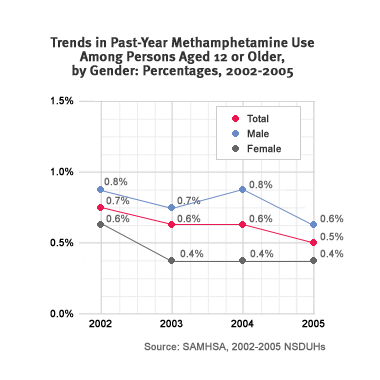
Last Friday, Jan. 26, the federal National Survey on Drug Use and Health released results from a survey that showed meth use had "declined overall between 2002 and 2005" and that the number of "initiates"— people using the drug for the first time in the 12 months before the survey—had "remained relatively stable between 2002 and 2004, but decreased between 2004 and 2005."

Homelessness a cause, not a result of drug abuse

This article has gotten a lot of attention today. It runs counter to my admittedly biased experience and the experience of colleague who work in settings focused on homelessness. Note that it uses the term substance abuse rather than dependence. It's easy to believe that people with a diagnosis of substance abuse may have developed problems after becoming homeless. I find it more difficult to believe that people with substance dependence would have developed their problem only after becoming homeless.

It will be interesting to see the actual report and analysis of it:

A report on homelessness in Melbourne has shattered two key myths: that substance abuse and mental illness are the major reasons why people become homeless....

About 43 per cent had problems with substance use while 30 per cent reported mental health problems. Of these, 66 per cent and 53 per cent respectively had developed the problems after becoming homeless.

Activists Plan 'Safe Site' for Drug Smokers

Another article on calls for a "safe inhalation site" in Vancouver:

Addicts who smoke hard drugs will have an indoor place to get their fix if a Vancouver drug users group is able to open North America's first safe inhalation site later this year....

Such an unsanctioned facility would provide a supervised location for addicts to smoke crack cocaine and heroin, in much the same way that Insite -- Vancouver's legally sanctioned three-year-old safe injection site -- provides services to addicts who inject the same drugs.

Sunday, February 04, 2007

Smoking manners

Japanese tobacco companies are doing their part to encourage good manners on the part of smokers. This is apparently a real ad campaign and frequently place on trains. I don't remember seeing these ads, but I do remember a similar public service warning painted on a sidewalk. It was a graphic of a cigarette poking a child in her eye. Enjoy.


Home at Last

PBS's series NOW had a segment on a housing first approach with a man named Footie who is chronically homeless and an alcoholic. He's clearly a late stage alcoholic, frequently has seizures and may have some cognitive impairment due to years of heavy drinking and seizures. (Streaming video of the entire episode is available at the link above.)

The story made a pretty compelling case for this approach with this him, arguing that it was impossible to address his higher order needs when his physiological and safety needs were not being addressed. Footie was provided an apartment with no contingencies. The approach could make a lot of sense in many cases--the question is which cases and under what conditions?

I had several reactions to the segment. First, had Footie ever been provided with comprehensive treatment of and adequate dosage, duration? Why no contingencies? Maybe his housing shouldn't be contingent upon abstinence, but how about participation in treatment? If the fear is that this might be a set-up, how about reviewing it at monthly or quarterly intervals so that a bad week does not put him back on the street? Why not at least make it recovery-focused? If this approach is good for Footie and raises his functioning and quality of life to his potential, who's functioning and quality of life might be reduced to something below their potential? At Dawn Farm, we see some clients who would probably benefit greatly from a recovery-focused housing program that is not contingent upon abstinence. However, how many of clients who are currently in full recovery would have settled into an apartment like Footie's and never achieved stable recovery and a full, satisfying life? Many, I think.

UPDATE: This isn't to say it shouldn't be done, but rather how to go about it in a way that doesn't lower the bar for all homeless addicts and fail to address what caused their homelessness. Maybe one way to approach it is to ask, "Absent their addiction, would this person still be likely to be homeless?" In the case of Footie, the answer is "probably so". In the case of most of our homeless clients, the answer is "unlikely".

Of course, another big question is how to prioritize services in the context of scarce resources.

Stop-smoking efforts reaching out to homeless

Homeless shelters are beginning to look at addressing nicotine addiction. The discussion sounds lot like those that have taken place among treatment centers for the last decade:
Following successful anti-tobacco campaigns geared toward pregnant women, teenagers, African-Americans, Latinos and other groups, homeless people...may be the next target.

Amid broad skepticism, nascent campaigns to get the homeless off cigarettes are bubbling up in Chicago and across the country.

A Humboldt Park shelter is holding regular meetings where the homeless can discuss their addiction to tobacco. In New York City, Zyban and other anti-smoking pills will be distributed over the next few months at homeless shelters, where 6,000 workers also will be trained in tobacco physiology. Nicotine patches have been offered at shelters in Seattle since last fall and are on the way to others in Wisconsin.

Even cessation proponents acknowledge that small gains will be seen as a victory, considering that 80 percent of the chronically homeless are addicted to smoking.

The goal, experts say, is to change the culture in shelters and possibly save millions each year in Medicaid payments for smoking-related illnesses.

Increasingly, the homeless themselves are pushing the subject. At Humboldt Park Social Services, which operates in one of the Chicago's poorest neighborhoods, residents sit around a folding table during regular meetings to discuss tobacco.

"We started talking about what can kill you, talking about AIDS and STDs, but they didn't want to hear that anymore. . . . Our clients were tired of it," said Noemi Avelar, director of operations. "They wanted to talk about smoking. They said this is what we do every day, so let's take a look at it."

Addressing addictions to heroin, cocaine and marijuana remain priorities, but tobacco use will be added to the list beginning this year, said Avelar.

So far, few shelters have jumped on the anti-smoking wagon. Most cite higher priorities among their clients, including serious psychological problems or addictions to alcohol, heroin, methamphetamines and crack.

..."We have more people addicted to nicotine than heroin, and the cigarettes can be harder to quit," Harden said. "We'd love to address smoking along the way, but right now there isn't much out there that would do much good."

The executive director of Aurora's only permanent emergency shelter said tobacco addiction is a very low priority.

"I hate tobacco, but there are a lot more serious issues I have to deal with, starting with funding," said Ryan Dowd of Hesed House. "Sure, smoking is bad and causes all sorts of health problems. So does sleeping outside and not having anything to eat."

Randal Syverson, 56, a resident at Hesed House, was openly skeptical of cessation programs.

"No house, no job, no family--a cigarette can be the only joy I'll have today," he said.
I understand the reluctance of the program staff. Locally, they're underfunded and overwhelmed with the number of clients and the broad scope of their problems. An all out push toward smoking cessation doesn't fit neatly within their mission and their clients are clearly facing larger barriers to achieving stable housing. However, shelters perform all sorts of secondary public health functions and they can at least begin to change the culture among the homeless and in shelters--from one that celebrates tobacco to one that tolerates tobacco.
At the very least, providers should begin asking clients if they want to quit, said Janet Porter, program director for the National Network on Tobacco Prevention and Poverty.

"I think we've all been surprised by the number of the homeless who say, `yes,'" Porter said.

..."What's good for someone working at a big upscale law firm is just as good for people living in the street," said Roger Valdez, manager of the county's tobacco-prevention program. "Everyone deserves clean water, air and the same chance to beat this addiction."

Friday, February 02, 2007

The Intellidrug tooth implant

A future drug delivery method?
Now EU researchers are developing a better, more accurate and more convenient way – a dental prosthesis capable of releasing accurate dosages into the mucous membranes in the mouth.

...

“The dental prosthesis consists of a drug-filled reservoir, a valve, two sensors and several electronic components,” explains Dr. Oliver Scholz of the Fraunhofer Institute for Biomedical Engineering IBMT in St. Ingbert, where the sensors and electronics were developed.

“Saliva enters the reservoir via a membrane, dissolves part of the solid drug and flows through a small duct into the mouth cavity, where it is absorbed by the mucous membranes in the patient’s cheeks.”

The duct is fitted with two sensors that monitor the amount of medicine being released into the body. One is a flow sensor that measures the volume of liquid entering the mouth via the duct, while the other measures the concentration of the agent contained in the liquid. Based on the measurement results, the electronic circuit either opens or closes a valve at the end of the duct to control the dosage. If the agent has been used up, the electronic system alerts the patient via a remote control, which was also developed at the IBMT. This control permits wireless operation of Intellidrug, and can be used by the patient or doctor to set the dosage required.

The patient has to have the agent refilled every few weeks. »This could be done using a deposit system whereby the patient swaps the empty prosthesis for a newly refilled one. At the same time, the battery could be replaced and the device could be serviced,« says Scholz.

Hand sanitizer: a good buzz?

Ethanol -based hand sanitizer will now be contraband in treatment programs, jails and prisons:
Prison officials and poison control centers can add a new substance to their list of intoxicants -- hand sanitizer. A usually calm 49-year-old prisoner prompted a call to the Maryland Poison Control Center after guards found him red-eyed, combative and "lecturing everyone about life." Other inmates and staff reported the unidentified prisoner had been drinking from a gallon container of hand sanitizer, which is more than 70 per cent alcohol, or over 140 proof

Does marijuana contribute to psychotic illness?

Current Psychiatry on marijuana and schizophrenia:

Cannabis and psychosis: 4 clinical pearls

  • Cannabis use increases the risk of developing psychosis and is estimated to double the risk for later schizophrenia (5 to 10 new cases per 10,000 person-years)

  • The association is not an artifact of confounding factors such as prodromal symptoms or concurrent use of other substances (including amphetamines)

  • The risk increases with the frequency and length of use (a dose-effect relationship)

  • Self-medication is not the connection between cannabis use and schizophrenia, according to empiric evidence


I'll keep an eye out for responses to this. It's so hard to know what to trust on something like this. This article seems reasonable, but it feels a little reminiscent of Reefer Madness. Also, the increased risk of schizophrenia may be statistically significant but I find it difficult to get too alarmed about the risk going from 1 in 2000 to 1 in 1000. (Maybe I should be more alarmed. I suppose that you start talking about large numbers when you multiply these numbers by large numbers of users.)

Thursday, February 01, 2007

Methylphenidate for Amphetamine Dependence

The American Journal Psychiatry ran a recent study on the effectiveness of methylphenidate for speed addiction. Could this be a future evidence-based practice? Let's hope not.

No Child Left Untested?

The ONDCP is starting a new push for random drug testing of athletes in schools. A truly awful idea. This article includes Q & A with representatives from the Drug Policy Alliance and ONDCP. It's a shame that the fringes get the spotlight.

The Michigan High School Athletic Association has weighed in against drug testing.

Potent drug blamed for death rise

It looks like we now have a final count for drug deaths in Wayne County in 2006:
The Wayne County Department of Health and Human Services reported that 542 people died from drugs from Jan. 1 through Dec. 10, 2006. That is up 19 percent from the 457 drug deaths reported for all of 2005.

Of the 2006 deaths, 178 were specifically attributed to fentanyl, 197 to heroin and 204 to cocaine. Because those drugs often are mixed, the numbers don't add up exactly...

Tuesday, January 30, 2007

Dopey, Boozy, Smoky—and Stupid

The National Interest has a lengthy article on drug policy by Mark A.R. Kleiman. I disagree with several of his points but this is exactly the kind of thoughtful contribution that the American drug policy debate needs more of.

I tend to see his perspective as hyper-rational (Possibly to balance the moral panic of drug crusaders and fetishization of drug culture by many legalization advocates.) and somewhat removed from both the suffering of addiction and the radical transformation that full recovery offers. I think he risks reducing policy issues to an accounting exercise but he expresses strong, well-informed opinions without and ideological ax to grind (Although there clear Libertarian themes.) and does so without characterizing and dismissing people who think differently.

After outlining the sad state of American drug policy he says:

These are depressing facts that cry out for a radical reform to solve the drug problem once and for all. But the first step toward achieving less awful results is accepting that there is no one “solution” to the drug problem, for essentially three reasons. First, the potential for drug abuse is built into the human brain. Left to their own devices, and subject to the sway of fashion and the blandishments of advertising, many people will wind up ruining their lives and the lives of those around them by falling under the spell of one drug or another. Second, any laws—prohibitions, regulations or taxes—stringent enough to substantially reduce the number of addicts will be defied and evaded, and those who use drugs in defiance of the laws will generally wind up poorer, sicker and more likely to be criminally active than they would otherwise have been. Third, drug law enforcement must be intrusive if it is to be effective, and enterprises created for the expressed purpose of breaking the law naturally tend toward violence because they cannot rely on courts to settle disputes or police to protect them from robbery or extortion.

Any set of policies will therefore leave us with some level of substance abuse—with attendant costs to the abusers themselves, their families, their neighbors, their co-workers and the public—and some level of damage from illicit markets and law enforcement efforts. Thus the “drug problem” cannot be abolished either by “winning the war on drugs” or by “ending prohibition.” In practice the choice among policies is a choice of which set of problems we want to have.

But the absence of a silver bullet to slay the drug werewolf does not mean we are helpless. Though perfection is beyond reach, improvement is not. Policies that pursued sensible ends with cost-effective means could vastly shrink the extent of drug abuse, the damage of that abuse, and the fiscal and human costs of enforcement efforts. More prudent policies would leave us with much less drug abuse, much less crime, and many fewer people in prison than we have today.

The reforms needed to achieve these ambitious goals are radical rather than incremental. But they are not simple, or all of a piece, or in any one of the directions defined by current arguments around American dinner tables, on American editorial pages or in American legislative chambers. The conventional division of drug programs into enforcement, prevention and treatment conceals more than it reveals. So does the standard political line between punitive drug policy “hawks” and service-oriented drug policy “doves.” Neither side is consistently right; some potential improvements in drug policy are hawkish, some are dovish, and some are neither.

I disagree with the hawk vs. doves dichotomy. The service-oriented doves are really divided into at least two camps. An older, more deeply entrenched group but shrinking group of treatment professionals who might be dovish relative to hawks, but generally support some form of prohibition. Then there is a newer group of doves who aren't all that service-oriented but are more radically dovish, advocating more radical decriminalization.

He offers five principles to guide policy decisions:
First, the overarching goal of policy should be to minimize the damage done to drug users and to others from the risks of the drugs themselves (toxicity, intoxicated behavior and addiction) and from control measures and efforts to evade them.

That implies a second principle: No harm, no foul. Mere use of an abusable drug does not constitute a problem demanding public intervention. “Drug users” are not the enemy, and a achieving a “drug-free society” is not only impossible but unnecessary to achieve the purposes for which the drug laws were enacted.

Third, one size does not fit all: Drugs, users, markets and dealers all differ, and policies need to be as differentiated as the situations they address.

Fourth, all drug control policies, including enforcement, should be subjected to cost-benefit tests: We should act only when we can do more good than harm, not merely to express our righteousness. Since lawbreakers and their families are human beings, their suffering counts, too: Arrests and prison terms are costs, not benefits, of policy. Policymakers should learn from their mistakes and abandon unsuccessful efforts, which means that organizational learning must be built into organizational design. In drug policy as in most other policy arenas, feedback is the breakfast of champions.

Fifth, in discussing programmatic innovations we should focus on programs that can be scaled up sufficiently to put a substantial dent in major problems. With drug abusers numbered in the millions, programs that affect only thousands are barely worth thinking about unless they show growth potential.

Finally, he offers an agenda for policy change. I doubt I could ever comfortably endorse some of these. Others, I find myself resisting, but in the context of radical change (rather than incremental), they may be more acceptable.
  • Don’t fill prisons with ordinary dealers.
  • Lock up dealers based on nastiness, not on volume.
  • Pressure drug-using offenders to stop.
  • Break up flagrant drug markets using low-arrest crackdowns.
  • Deny alcohol to problem drinkers.
  • Raise the tax on alcohol, especially beer.
  • Eliminate the minimum drinking age.
  • Prevent drug dealing among kids.
  • Say more than “No.”
  • Don’t rely on DARE.
  • Encourage less risky forms of nicotine use.
  • Let pot-smokers grow their own.
  • Encourage problem drug users to quit without formal treatment.
  • Expand opiate maintenance.
  • Work on immunotherapies.
  • Get drug enforcement out of the way of pain relief.
  • Create a regulatory framework for performance-enhancing chemicals.
  • Figure out what hallucinogens are good for, and don’t let the drug laws interfere with religious freedom.
  • Stop sacrificing foreign policy and human rights objectives to drug control.

Monday, January 29, 2007

How kids can drink at home, legally

It was news to me that 31 states permit underage drinking with a parent:

"You can be 10 years old and drink in Virginia," said Beth Straeten, a spokeswoman for the state's Department of Alcoholic Beverage Control.

Surprised?

...Eleven states, Virginia among them, say providing alcohol to an underage son or daughter can only occur in the home. Twenty other states say parents can provide alcohol to their children anywhere.

The Virginia exception was passed during the 2006 legislature. It drew only two negative votes and won the signature of Gov. Timothy M. Kaine.

I was unable to find out what Michigan's law is. I'll post an update if anyone fills me in.

[Update: Jess found what appears to be the relevant Michigan law and there does not seem to be any language that would permit a minor to drink with a parent.]

Scientology Treatment Program for Prisoners Funded by Feds

Scientologists have scored a victory in New Mexico:

Federal tax dollars are helping to pay for a controversial addiction-treatment program for prisoners in New Mexico based on Scientology precepts...

The Second Chance program is billed as an alternative treatment program for nonviolent offenders and uses the principals of Scientology -- such as using saunas, diet, massage and vitamins to purge the body of toxins -- to fight addiction. In New Mexico, 24 of the state's 84 district judges have referred a total of 50 clients to the program since it opened last September.

Second Chance is the only Scientology-based treatment center for inmates in the U.S. A former chief district judge from Albuquerque, W. John Brennan, is a paid consultant hired to promote the program to his former colleagues. But the current chief district judge, William Lang, doesn't want judges to make referrals to the program, saying he is suspicious of its relationship with the Church of Scientology even though program officials say there is no link.

..."There's a lot of use of sauna with the idea that you sweat out toxins in the system," said addiction expert Bill Miller, who reviewed the program at the request of the city of Albuquerque. "I don't know of any scientific basis for that. It wasn't clear to me what sort of scientific basis there was even for the conception of the program to begin with."
The most troubling thing about Narconon and other Scientology-based programs is their consistent denials of any connection to the Church of Scientology. Offering a faith-based program is one thing, but misrepresenting themselves is another.

Stats.org weighed in on the WSJ's over-tentative reporting on matter. Unfortunately the author (Maia Szalavitz) appears to have forgotten to include Twelve Step Facilitation when mentioning evidence-based treatment strategies.

Why is it so hard to help drug-addicted criminals?

Here's a column about a rejected proposal (Hamilton, Ontario) to house an addiction counselor in the police department to intervene at the time of arrest throughout the judicial process. The goal is to capitalize on the crisis of being arrested and charged with a crime as an opportunity for active linkage to help rather than a passive referral.

It was shot down because they wanted prevention programs. It's an interesting idea that could be effective.

What's more interesting is what this (and programs like drug courts) says about systemic ownership of the problem of addiction. Over the last decade or so the criminal justice system has been realizing that the drug problem is not a simple criminal matter and they they are not equipped to respond in an effective and humane manner. The response has been to incrementally develop therapeutic responses within the criminal justice system, many with decent results. However, it seems that the real issue is what system(s) should "own" the problem.

There's a push right now to move ownership from the criminal justice system to the public health system (not necessarily the treatment system). If this movement was successful, I suspect that within a generation there would be renewed calls for ownership to be transferred back to the criminal justice system.

Right now I'm thinking that it doesn't have to be and either/or decision. It seems that there could be shared ownership to some extent--maintaining some reduced measure of prohibition (I know that the work prohibition freaks people out, but we prohibit everything from speeding to murder. Pretty broad continuum of enforcement approaches, no?) and rebuilding access to a treatment system with continuous recovery management.

Saturday, January 27, 2007

The Short Road to Recovery


Sage Stossel
Atlantic Monthly Online
Jan 27, 2007

Electric shock therapy for addicts

Scotland starts a new trial of ECT (source):

A radical new treatment for heroin addiction is to undergo its first clinical trial in Scotland, it was announced yesterday.

Neuro-electric therapy - NET - has been billed as a safer, more effective alternative to methadone, the heroin substitute which is both addictive and damaging to health.

The creators of NET believe their detoxification therapy not only reduces withdrawal symptoms but also removes cravings.

Friday, January 26, 2007

Readiness for change and drug use outcomes after treatment

Another study finding that the client's stage of change is a poor predictor of outcomes:
Results failed to support the hypothesis that taking steps should be associated with less frequent use of illicit opiates at follow-up. No statistically significant associations of any kind were found between readiness for change measures and use of opiates or stimulants at follow-up. A negative association was found between taking steps and benzodiazepine misuse. Readiness for change measures were correlated with heroin use and psychiatric symptom scores at treatment intake.
There has been high profile criticism that the rush to embrace the stages of change has outpaced the evidence. The question isn't whether the stages of change have any utility. The question is what are they useful for? Patient/family eduction, counselor education, conceptualizing interventions, matching treatments, etc.

The stages of change have undoubtedly changed the field for the better, but there are a lot of weak points that have not been adequately explained--failure to recognize the instability of motivation; disagreements about how to determine the client's stage of change; failure to account for stable, unplanned change; failure to explain for stable, initially coerced change. I've been especially concerned about practitioners relying on the stages of change for treatment placement and the inevitable post hoc deconstructions of treatment "failures" that blame the client's motivation and then conclude that we wasted money treating them (and suggest that better assessment would have led to the conclusion that the client wasn't motivated and a better referral).

Robert West, the editor of Addiction, has offered a new model for understanding change, he has called the PRIME theory.

More on the insula and smoking

I posted earlier on an exciting study on the relationship between the insula and nicotine addiction. Here's an article with a little more detail.
[via: New Recovery]

Singapore drug cases jump 42 pct on Subutex abuse

Singapore is reporting problems with buprenorphine misuse. It's too bad that the drug they've used is not Suboxone. Suboxone has naloxone added to reduce the potential for misuse. It will be interesting to see if the addition of naloxone is effective in reducing diversion.
Drug-abuse cases in Singapore soared last year, mainly because of a surge in the use of Subutex, a drug which was introduced to help wean drug addicts off heroin, Singapore's Central Narcotics Bureau (CNB) said.

Singapore introduced Subutex as a prescription medication five years ago to help wean addicts off heroin. But the narcotics agency said that 30 percent of abusers caught were hooked on Subutex, which is sometimes mixed with a tranquiliser or other drugs to produce a high.

But in mid-August, the government reclassified Subutex as an illegal drug. Since then, authorities have arrested a total of 347 people for abusing the drug. In all, Singapore has arrested 1,127 users last year, up 42 percent from 793 in 2005, the CNB said in a statement.

Thursday, January 25, 2007

Spot in brain may control smoking urge

A stroke patient may have revealed a key to understanding craving:
Damage to a silver dollar-sized spot deep in the brain seems to wipe out the urge to smoke, a surprising discovery that may shed important new light on addiction. The research was inspired by a stroke survivor who claimed he simply forgot his two-pack-a-day addiction - no cravings, no nicotine patches, not even a conscious desire to quit.

"The quitting is like a light switch that went off," said Dr. Antoine Bechara of the University of Southern California, who scanned the brains of 69 smokers and ex-smokers to pinpoint the region involved. "This is very striking."

Clearly brain damage isn't a treatment option for people struggling to kick the habit.

But the finding, reported in Friday's edition of the journal Science, does point scientists toward new ways to develop anti-smoking aids by targeting this little-known brain region called the insula. And it sparked excitement among addiction specialists who expect the insula to play a key role in other addictions, too.

"It's a fantastic paper, it's a fantastic finding," said Dr. Nora Volkow, director of the National Institute on Drug Abuse and a longtime investigator of the brain's addiction pathways.

"What this study shows unequivocally is the insula is a key structure in the brain for perceiving the urges to take the drug," urges that are "the backbone of the addiction," Volkow added.

Why? The insula appears to be where the brain turns physical reactions into feelings, such as feeling anxious when your heart speeds up. When those reactions are caused by a particular substance, the insula may act like sort of a headquarters for cravings.

Mid-lifers most likely to have injected drugs

More evidence that the most serious drug problems are among middle-aged people:
Injection drug use is becoming less common among young people in the U.S., especially blacks, a new analysis of national data shows.

In fact, middle-aged men and women are more likely to have ever injected drugs than younger people -- or older people, for that matter...

Psychiatric disorders and substance misuse

Last night I posted an article about gender and substance misuse. I didn't realize that the Psychiatric Times had a special report section on psychiatric disorders and substance misuse. I haven't had time to read the whole thing yet. What I did read seemed okay other than a sky high prevalence estimate for borderline personality disorder in people with substance use disorders:
Nearly one third of those with a lifetime SUD diagnosis also have BPD (median, 27%; range, 5.2% to 74.0%).16,20 BPD appears to be less prevalent in persons with alcohol use disorders (median, 16%; range, 3.2% to 27.4%) than in those with drug use disorders, especially cocaine and opioid abuse.17,20 For example, Ross and colleagues17 found that almost half (47%) of individuals using heroin who entered treatment for SUD also had BPD.
Here's a list of all the articles:

Wednesday, January 24, 2007

Alternative treatments give addicts a chance

An opinion piece on Sam Sullivan's (Vancouver's Mayor) proposal for stimulant maintenance programs. (Previous post here.) Grrrr.

Protecting fetuses from mothers who drink

Statin drugs may protect fetuses from maternal alcohol use.

Methadone in the news

Two recent stories on methadone. First, researchers may have identified a genetic marker that indicates the person's drug metabolism. They believe that these finding could be important in determining dosing for methadone. Second, a story about prison-based methadone programs.

Substance abuse in women: Does gender matter?

The Psychiatric Times runs a helpful review of gender differences in substance misuse. It covers several areas including epidemiology, comorbidity, diagnosis, course and neurobiology. From the section on treatment:
A number of studies indicate that women are less likely than men to enter treatment.1 Reasons for lower rates of treatment entry may include sociocultural factors (eg, stigma, lack of partner/family support to enter treatment), socioeconomic factors (eg, child care), pregnancy, fears concerning child custody issues, and complexities associated with increased rates of co-occurring psychiatric disorders and the availability of appropriate dual-diagnosis treatments.1,30,46 Furthermore, as previously stated, many women seek treatment at settings or clinics other than substance abuse clinics (eg, primary care, mental health).18

Those women who do enter substance abuse treatment receive similar benefits to those received by men. There are few, if any, consistent gender differences in treatment outcome, retention rates, or relapse rates across various types of substances, treatment settings, and types of treatment.1,47,48 In studies that have found gender differences, women typically have better outcomes than men. For example, women have been found to have higher rates of abstinence at 6-month follow-up (79.3% of women vs 54% of men) and at 5 years (odds ratio, 1.9).24,49,50 Women also demonstrate greater improvement in other domains (eg, medical problems51), have shorter relapse episodes,52 and are more likely to seek help following a relapse.52,53

Tuesday, January 23, 2007

What a Long Strange Trip It's Been

Mentions of ecstasy as a therapeutic tool have popped up here and there for some time. Looks like we may be hearing more about it in the coming year:
This year, the drug MDMA, otherwise known as ecstasy, could take a step toward medical respectability. Researchers in South Carolina have begun experimenting with MDMA for patients with post-traumatic stress disorder. At Harvard, a long-awaited pilot study will begin on whether the drug can help relieve anxiety and pain in terminal cancer patients in connection with psychotherapy. And studies will also start in Switzerland and Israel, where a former chief psychiatrist of the Israel Defense Forces will oversee work with people whose PTSD stems from terrorism or war.

Monday, January 22, 2007

Vancouver mayor proposes 'revolutionary' plan for addicts

Vancouver's Mayor is promoting his plan for stimulant maintenance again and calling it treatment. This is the same guy who suggested that addicts and the public need to get real and accept addiction as a permanent disability, like his experience of having to accept his spinal cord injury and life in a wheel chair.
Vancouver Mayor Sam Sullivan is lobbying the federal government for an exemption from Canada's narcotics laws that would allow what he calls a "revolutionary" alternative drug-treatment plan to give substitute drugs to at least 700 cocaine and crystal-meth addicts.

If he is successful, Vancouver would be a global pioneer in running such a large-scale program of drug maintenance for stimulant-drug users.

Sullivan said the drug plan, along with three other key elements that have to come from Ottawa or Victoria, will eliminate most of Vancouver's problems with homelessness, panhandling and drug-dealing. Those are the three social problems he promised to reduce by half in time for 2010 in the Project Civil City initiative that he launched in November.

Do drug courts tame the meth monkey?

Utah's Governor starts a drug court push for meth addicted mothers and proposes significant investment in treatment:
Despite efforts to combat it, Utah's meth problem continues to grow - especially for women.
For five years, meth has been the top illegal drug of choice for Utahns entering public treatment. For women it surpasses even alcohol, the traditional front-runner, making it the only drug in history to have its female users outnumber males. Nearly half the women in treatment statewide have children.

Gov. Jon Huntsman Jr. has proposed investing $2 million in Utah's drug courts and $2.5 million to build two residential clinics in northern and southern Utah to treat 600 women, giving priority to those involved with the child welfare system. But Huntsman will have to convince lawmakers it's a wise investment, no easy task considering the stigma attached to addiction and a dearth of data on treatment, including how patients and drug court graduates fare over the longer term.

Helping Utah's women poses another challenge: transforming a system that wasn't built for them.

"Substance abuse treatment has been historically geared for white, middle-aged male alcoholics," said Salt Lake County substance abuse Director Patrick Fleming. "We're a hell of a lot better at treating women than 10 years ago, but there's room for improvement."
I'd challenge the "dearth of data" statement. We have a lot of data on the effectiveness of treatment and drug courts.

Friday, January 19, 2007

More Nicotine Madness

Media critic Jack Shaeffer weighs in on the coverage of this week's Harvard nicotine level study. He shares the tobacco companies side of the story and says, "so what" about higher nicotine levels:
A substantial body of scientific research shows that smokers excel at milking cigarettes for the nicotine dose they desire, irrespective of how many milligrams of nicotine the actual cigarette they end up smoking contains. The well-known behavior is called "compensatory smoking." University of Waterloo professor David Hammond wrote in a sidebar to my piece last summer, "humans adjust the intensity of their smoking in response to the cigarette design and emission level. Therefore, 'lower nicotine' yield cigarettes are smoked systematically more intensely."
...

Whenever the press writes about nicotine yields, it invariably quotes some public-health advocate warning that even these incremental increases in nicotine automatically make cigarettes more addictive. But if that were true, wouldn't the press or somebody have saluted the tobacco industry for reducing the addictive potential of cigarettes whenever nicotine levels dropped? Indeed, between 1972 and 1983, the average measured nicotine (sales weighted) dropped from 1.39 milligrams per cigarette to 0.88 milligrams per cigarette. From 1989 to 1996, it dropped from 0.96 milligrams per cigarette to 0.88 milligrams per cigarette. (See this Federal Trade Commission PDF.) I don't recall hearing any cheering.

The nicotine-yield obsession blinds the press and some in the public-health establishment to the fact that, as Hammond wrote in the Slate sidebar last summer, there's enough nicotine in any commercially available cigarette "to promote and sustain addiction." All cigarettes are dangerous, no matter what their octane rating.

Ketamine relieves depression within hours

Ketamine may provide insight into new mechanisms for medication development for depression:

A drug used as a general anaesthetic may also work as a remarkably rapid antidepressant, according to a preliminary study.

The drug’s hallucinogenic side effects mean it is unlikely to be prescribed to patients, but it could pave the way to new faster-acting antidepressants, the researchers suggest.

Ketamine is used as an animal tranquiliser, but is perhaps better known as an illicit street drug, sometimes called “special K”. Now researchers have found the drug can relieve depression in some patients within just 2 hours – and continue to do so for a week.

In utero marijuana exposure alters infant behavior

The Journal of Pediatrics has a new study suggesting in utero marijuana exposure may cause behavior changes in newborns. I'll look forward to attempts to replicate these findings:
Infants exposed to marijuana in the womb show subtle behavioral changes in their first days of life, researchers from Brazil report.

These newborns were more irritable than non-exposed infants, less responsive, and more difficult to calm... They also cried more, startled more easily, and were more jittery. Such changes...have the potential to interfere with mother-child bonding.

Barros and her team looked at 561 infants born to adolescent mothers. Twenty-six of them had been exposed to marijuana, as revealed by tests on the mother's hair and the infant's stool. Just one of the mothers had reported smoking pot while pregnant.

Trained examiners, who did not know a child's marijuana exposure status, tested the neurobehavioral responses of all infants. On average, marijuana-exposed infants scored differently on measures of arousal, regulation and excitability compared to the non-exposed infants.

...

Marijuana's active ingredient, tetrahydrocannabinol (THC), does cross the placenta into the fetal circulation, Barros and her team point out. The drug also has been shown to trigger the expression of the neurotransmitter dopamine, they add, and this could result in long-term alterations in nervous system function.

"It is necessary to counter the misconception that marijuana is a 'benign drug' and to educate women regarding the risks and possible consequences related to its use during pregnancy," Barros and colleagues conclude.

U.S.-Style Rehabs Take Root in China As Addiction Grows

A shift in problem ownership of addiction from criminal justice to specialty treatment providers:
Half an hour outside this capital city in southwest China's Yunnan province, amid 100 acres of fruit trees and vineyards, three dozen recovering drug addicts stand every morning in a loose circle, their arms around each other's shoulders.

The voices that ring out do not recite the forced slogans and denouncements often heard in China's state facilities for drug users. Instead, the group reads aloud a mission statement that has been adopted from a New York-based drug treatment center:

"I am here because there is no refuge," the participants said in unison on a recent Saturday morning. ". . . Until I confront myself in the eyes and hearts of others, I am running."

That focus on individual responsibility and peer interaction is atypical for a drug treatment facility in China. Much more common are techniques used at the nearly 600 compulsory detoxification centers run by the police, or the even tougher techniques used by the Justice Department at reeducation campuses for repeat offenders. Both are military-like institutions that emphasize manual labor as part of their regimen.

Thursday, January 18, 2007

Narcotic Meds for Back Pain Questioned

This caught my attention and has some practical application, for physicians treating back pain--they should engage in pretty tight follow-up of they are prescribing opiates on long term basis for back pain. What I found more interesting is that this figure of 24% matches previous "capture rate" data pretty closely.
While the pain may be relieved to some extent over the short-term (3 months), the risk of addiction and long-term effectiveness may override any temporary benefits.

Researchers from the Yale School of Medicine found use of opiods for short-term relief of chronic back pain lead to behaviors of opiod abuse in 24 percent of the cases reviewed.

Researchers Confirm Rising Nicotine Rates

Phillip-Morris denies it, but a new Harvard study confirms a study done earlier this year finding that nicotine levels in cigarettes have increased over the last decade:
Researchers at the Harvard School of Public Health say they have confirmed a study released last year by health officials in Massachusetts that found steadily increasing levels of nicotine in cigarettes sold in the state from 1997 to 2005. The analysis, based on data submitted to the Massachusetts Department of Public Health by cigarette manufacturers, found that increases in smoke nicotine yield per cigarette averaged 1.6 percent each year, or about 11 percent over a seven-year period.

Wednesday, January 17, 2007

Ending an Opium War: Poppies and Afghan Recovery Can Both Bloom

Washington Post columnist Anne Applebaum argues for the U.S. to start purchasing opium poppies from Afghanistan. She frames it through a lens of Afghan national stability and U.S. foreign policy interests. Her arguments are persuasive, unfortunately a couple toss away lines suggest a bias:
Of course it isn't fashionable right now to argue for any legal form of opiate cultivation.

...

The only good arguments against doing so -- as opposed to the silly, politically correct "just say no" arguments --...
What are the "just say no" arguments anyway? Am I silly for feeling queasy about the idea of further institutionalizing poppy farming and wondering if has the potential to increase international production?

I'd also challenge the "politically correct" and "unfashionable" feels spurious., she's hardly in the wilderness. Certainly, the White House is staunchly pro-war-on-drugs, but the media, academics, public health activists, and growing numbers of politicians and political thinkers on both ends of the spectrum are increasingly calling for radical changes in drug policy--including legalization

Public support for parity

Mental Health American (formerly the National Mental Health Association) released a poll on mental health and substance abuse parity this week. They are an advocacy group, so they have a clear bias, but the results they report are overwhelming:
Americans Think Health Coverage Should Include Mental Health and Substance Abuse... A large majority (74%) believe that insurance plans should cover substance abuse treatments at the same levels as treatments for general health issues. 23% feel that they should not be covered equitably. * The public demand for mental health equity is bipartisan -- 83% of Republicans and 92% of Democrats want equitable health insurance.

The other losing war

Commentary on the impact of the war on drugs in this hemisphere.

Tuesday, January 16, 2007

Big score holy grail for drug officers

A peak inside some of the culture problems in the narcotics unit in Atlanta. This article paints a picture of a unit that wants to make big busts but has so much pressure to generate arrests that they spend all their time arresting people with small quantities and sometimes cutting corners to get them. This is presented as the context for a shootout with a 92 year old woman that ended in her death.

'Drinko': Anatomy of an Advocacy Campaign

Join Together breaks down the campaign that get Target, Kohl's and Linens 'n Things to stop selling drinking games.

More on radical recovery

I got some strong responses to Radical Recovery and thought you might want some more on the subject. Here are two more articles on the tension between 12 step recovery's focus on self-change and social activism.

Kennedy, Ramstad hit the road to tout mental health measure

Substance abuse and mental health parity bills have been introduced several times in the last decade. Supporters reportedly have all the votes they need to pass it and President Bush has indicated that he would sign it, but Republican house leadership consistently blocked it from going to the floor for a vote. Hopefully this will be an opportunity to enact it.
Reps. Patrick Kennedy (D-R.I.) and Jim Ramstad (R-Minn.) will embark on a six-city tour today to tout legislation that would require insurance companies to treat mental illness and addiction just as they would any physical illness. The tour will kick off in Providence, R.I., then head to Ramstad’s district in Minnetonka, Minn., and continue on to Rockville, Md., Los Angeles and Vancouver, Wash.

Monday, January 15, 2007

Radical Recovery

For MLK day, here's an article by Bill White on "radical recovery." He describes a convergence of social activism and addiction recovery.

The article offers a model that goes well beyond the the interests of recovering people themselves and encourages advocacy in larger community contexts:
A radical recovery movement is now rising in America. That movement is flowing from the realization that addiction and its progeny of problems are visible everywhere, while recovery from addiction lies hidden. It is rising in the recognition that the stigma attached to AOD problems has increased in recent decades and has fueled the demedicalization and recriminalization of these problems. What started out as “zero tolerance” for drugs rapidly evolved into zero tolerance for people with AOD problems. It is in this regressive climate that a style of recovery is emerging that is radical in its scope (focus on environmental as well as personal transformation), radical in its inclusiveness (celebration of multiple pathways and styles of recovery), and radical in its synthesis of social responsibility and personal accountability. People in recovery are looking beyond their own addiction and recovery experiences to the broader social conditions within which AOD problems arise and are sustained. A radicalized vanguard of people in recovery is using personal transformation as a fulcrum for social change. They are living Gandhi’s challenge to become the change they wish to see in the world. Those who were once part of the problem are becoming part of the solution.

Sunday, January 14, 2007

My Adventures in Psychopharmacology

A 23 year old women tells of her nightmarish experience with the psychiatric and addiction treatment system. She was prescribed 15 different drugs over a period of 5 years and, surprise, surprise, when treatment failed, she was blamed. The story ends with her being presumably correctly diagnosed and treated, but it's hard not to wonder if she has a chronic mentally illness at all.

Aside from the iatrogenic harm that professional hubris can cause, this story illustrates the hazards of a system that encourages rapid diagnosis.

Medication Nation

The Washington Post published a review of the recently published book, The Cult of Pharmacology by Richard DeGrandpre. DeGrandpre presents a pretty provocative premise:

Why isn't Nicorette gum a street drug? The Food and Drug Administration considers nicotine highly addictive. Tobacco companies seem to share this view when they manipulate the level of nicotine in cigarettes. But the gum, which packs a goodly dose of nicotine, appeals to almost no one. While we're at it, if nicotine dependence is what stands in the way of quitting, why do patched smokers -- their brains well-supplied with the substance -- still crave the next drag?

If these questions have an answer, it is that addiction is not a simple matter of chemical and receptor. Habit, ritual, social context and the means of delivery all affect how the brain processes a drug and how we experience it. As a result, drug research is replete with paradox.

...

Psychoactive compounds, he writes, function "as mere stimuli, with more or less the same, potentially great, powers as other stimuli one experiences and gives meaning to." DeGrandpre derides a set of beliefs that he groups under the infelicitous name "pharmacologicalism." This false ideology, he writes, holds that "drugs contain potentialities that lie within the drug's chemical structure . . . and when taken into the body, these potentialities take hold of and transform both brain and behavior." According to DeGrandpre, drugs do not work in any consistent, predictable way -- and we've been brainwashed if we think that they do.

The prevailing ideology, DeGrandpre argues, has another, equally insidious side. It causes us to attribute different powers to substances that are effectively identical. We demonize cocaine, a natural stimulant, but sanctify its synthetic counterpart, Ritalin. This benefits the "medicopharmaceutical industrial complex," which favors what can be patented and profited from. Ultimately, our confused beliefs lead to forms of social control, causing us to drug our children with stimulants while imprisoning consenting adults for taking nearly identical substances such as crystal meth.

The reviewer writes a thoughtful and effective critique of DeGrandpre's arguments:

The problem with DeGrandpre's argument is that he, more than his imagined opponents, ignores context. The findings of behavioral pharmacology are not unique; in medicine, environment often modifies physiology. Interferon, a medication used to treat certain cancers, causes depression, but it does so less in people who have social supports and more in patients who have had past depressive episodes. To show that the response is multifactorial hardly invalidates the claim that the drug triggers mood disorders.

Expectancy is powerful. Acupuncture is effective in pain relief. But so is sham acupuncture -- using shallow needles inserted at random points. Pain responds to placebos. It does not follow that pain lacks anatomical roots or that the use of aspirin for pain management amounts to a conspiracy.

Our drug policies, arising from puritanical moralizing as much as from the needs of corporations, are often irrational. Still, not every choice is without foundation. Like cocaine, Ritalin modulates dopamine transport in the brain. But schoolchildren who take Ritalin by mouth generally experience no high and develop no craving, while snorting cocaine famously does cause a rush. And crystal meth's minor chemical distinction -- it is water soluble and therefore easy to inject -- makes a major practical, and addictive, difference. That we allow Ritalin to be prescribed suggests that, as a nation, we pay attention both to drugs' chemical properties and to their customary usage -- hardly a sign of ideological rigidity.

It's too bad he throws in the drug policy statement. The suggestion that the motivations for U.S. drug policy are two-faceted and wholly insidious reveals his own ideology.

Friday, January 12, 2007

The needle and the damage done

This 2 year old article about the disciplinary of some British methadone maintenance physicians has been making the rounds today. It has a pretty clear bias for maintenance, but it offers quite a bit of history about the British opiate addiction treatment. It also illustrates how committed the British system has been to methadone. The whole debate is between methadone detox and methadone maintenance.

As the story of these doctors progresses, it includes drugs (obviously), Madonna, Hollywood and martial arts--what more could you want?

Three of the doctors involved were found guilty of misconduct and one was stripped of his license.

Benefit-Cost in the California Treatment Outcome Project: Does Substance Abuse "Pay for Itself?"

I think I posted a news article summarizing these findings, but this link includes a PDF of the journal article:
Results from a cost-benefit analysis of substance abuse treatment programs are presented. Sections of this article include: abstract; methods; results according to per diem substance abuse treatment costs, average cost and benefits associated with substance abuse treatment, pre-post changes in the individual sources of monetary benefit, sensitivity analyses; "inflating" the arrest data, multiple regression models, cohort, and varying treatment intensity across providers; and discussion. A ratio of 7:1 benefits to costs exists; a benefit of $11,487 to a cost of $1,583.

Thursday, January 11, 2007

Tobacco report cards

The American Lung Association issued report cards for all 50 states on their tobacco policies. Michigan didn't fare too well:
REPORT CARD

STATE OF TOBACCO CONTROL 2006 MICHIGAN

Grades:
Smokefree Air - F
Youth Access - F
Tobacco Prevention and Control Spending - F
Cigarette Tax - A

US prison release a health risk: study

A new study reinforces the risks associated with overdose and release from prison:

Getting released from US prisons could be even more dangerous than being in them.

Death and prison records from Washington state show that 30,237 convicts released from 1999 to 2003 were 12 times more likely to die from a drug overdose and 10 times more likely to be murdered in a two-year period than the general population.

...

During the two-week period immediately after their release, compared to years later, the ex-cons were:

* 29 times more likely to die from cocaine;

* 34 times more likely to die from a heroin overdose;

* 15 times more likely to be killed by alcohol;

* more than twice as likely to be gunned down; and

* nearly 8 times more likely to commit suicide.

The authors of the study characterized these results as surprising. I'm not sure why it should be surprising. It's well known that substance use problems occur in around 80% of inmates and that addicts are at greatest risk for overdose after a period of abstinence, especially involuntary abstinence. Additionally, people who end up in prison are probably among those with the greatest number of co-occurring problems. They get placed in a toxic environment, get little or no treatment and (locally) are often released into conditions that make relapse and recidivism nearly inevitable.

Facts on the new smoking cessation medication

A new fact sheet on Varenicline (the generic name for Chantix), the newly approved smoking cessation drug. It's the first drug to target nicotine receptors.

Tuesday, January 09, 2007

Study: H.S. Teenage Binge Drinking Common Link To Greater Risky Behaviors

A new report on the prevalence of teen binge drinking and the harms associated with it:
The latest study published in the January issue of "Pediatrics" based on the Centers for Disease Control (CDC) study indicates that binge drinking is common among high school students and is linked to a greater participation in several other risky behaviors.

The new study conducted by CDC scientists, Binge Drinking and Associated Health Risk Behaviors Among High School Students, found that 45 percent of high school students admittedly reported to alcohol consumption within the last month. The survey found that 64 percent of these students also reported binge drinking.

Binge drinking is defined as consuming five or more alcoholic drinks in a row within a few hours of time.

The study found that the probability of teenage binge drinkers to be tempted to get involved in other risky behaviors was much higher than that of the nondrinking teens.

These risky behaviors included sexual activity, smoking and physical fighting to name a few.

Although those students who denied any binge drinking were involved in many of the other risky behaviors, the extent to which they were involved was much lower than those students who admitted to binge drinking.

According to CDC researcher, Jacqueline Miller, MD, "Our study clearly shows that it's not just that students drink alcohol, but how much they drink that most strongly affects whether they experience other health and social problems."

The CDC researchers indicated the following comparisons between nondrinking and binge drinking teenagers from their study, with teen binge drinkers being:

  • Greater than five times more likely to be sexually active with one or more partners.
  • Smokers with 19 times more likelihood to smoke cigarettes.
  • Almost four times as likely to engage in physical fights.
  • Eleven times more likely to become a passenger in a vehicle being driven by another who has been drinking alcohol.
  • Almost four times more likely to date rape or a victim of violence by the opposite sex.
  • Four times more likely to attempt suicide.
  • At greater risk to use drugs, such as marijuana and cocaine.
The survey also indicated that binge drinking among these teenagers was more common with boys than girls.

The binge drinkers self-admittedly reported poorer grades in school as well.

Overall, the survey included reports of both public and private school students across the entire U.S.

Assertive Continuing Care effectiveness

More evidence for the effectiveness of assertive continuing care (ACC) in adolescents. It's an important emerging recovery management approach:
ACC led to significantly greater continuing care linkage and retention and longer-term abstinence from marijuana. ACC resulted in significantly better adherence to continuing care criteria which, in turn, predicted superior early abstinence. Superior early abstinence outcomes for both conditions predicted longer-term abstinence.

Advocates Renew Push for Mental Health 'Parity' Bill

This NPR story suggests that there is a good opportunity right now for passing parity legislation. The story never mentions addiction treatment. In the past, every time they get close to passing comprehensive parity (mental health and addiction), they drop addiction. We'll see what happens with this go-round.

Monday, January 08, 2007

Memory’s Link to Recovering from Addiction

A pretty clear explanation of one of the neurobiological mechanisms of addiction:
New research on the brain is showing that addiction is a matter of memories, and recovery is a slow process in which the influence of those memories is diminished...

Studies have shown that addictive drugs stimulate a reward circuit in the brain. The circuit provides incentives for action by registering the value of important experiences. Rewarding experiences trigger the release of the brain chemical dopamine, telling the brain “do it again.” What makes permanent recovery difficult is drug-induced change that creates lasting memories linking the drug to a pleasurable reward.

High school drug use predicts job-related outcomes at age 29

A new study finds a relationship between adolescent drug use and job status 10 years later:
Overall, the results suggest that adolescent drug use is linked with poorer occupational and job quality outcomes as much as 10 years after high school. Interestingly, which job-related outcomes are affected by early hard drug use varies by gender. Females who use hard drugs as adolescents end up in lower skill, lower status jobs while males who use hard drugs as adolescents are more likely to end up in jobs with fewer benefits (e.g., health, retirement).

Friday, January 05, 2007

Youngest Drinkers Likelier To Use Alcohol For Stress Relief As Adults

A new study reports on the impact of one risk factor for problem substance use:
The younger someone starts drinking alcoholic beverages, the more likely he or she is to reach for a drink to relieve stress when older, a large new study suggests.

...

Respondents were asked whether they had experienced 12 different types of stressful events in the previous year, such as death of a family member or close friend, unemployment for more than a month, financial crises, legal problems or disruption of a marriage or romantic relationship.

Average daily consumption of alcohol increased by 19 percent with each additional stressful event experienced among those who started drinking at 14 or younger compared with 3 percent among those who took their first drink at 18 or older.

After adjusting for other factors that might be related to the amount of alcohol consumed, the researchers said "the association between stress and volume of consumption was significant only for early initiators."

Encouraging Posttreatment Self-Help Group Involvement to Reduce Demand for Continuing Care Services

A new study on 12 step involvement as continuing care:
Background: Accumulating evidence indicates that addiction and psychiatric treatment programs that actively promote self-help group involvement can reduce their patients' health care costs in the first year after treatment, but such initially impressive effects may wane over time. This paper examines whether the positive clinical outcomes and reduced health care costs evident 1 year after treatment among substance-dependent patients who were strongly encouraged to attend 12-step self-help groups were sustained at 2-year follow-up.

Methods: A 2-year quasi-experimental analysis of matched samples of male substance-dependent patients who were treated in either 12-step–based (n=887 patients) or cognitive-behavioral (CB, n=887 patients) treatment programs. The 12-step–based programs placed substantially more emphasis on 12-step concepts, had more staff members "in recovery," had a more spiritually oriented treatment environment, and promoted self-help group involvement much more extensively than did the CB programs. The 2-year follow-up assessed patients' substance use, psychiatric functioning, self-help group affiliation, and mental health care utilization and costs.

Results: As had been the case in the 1-year follow-up of this sample, the only difference in clinical outcomes was a substantially higher abstinence rate among patients treated in 12-step (49.5%) versus CB (37.0%) programs. Twelve-step treatment patients had 50 to 100% higher scores on indices of 12-step self-help group involvement than did patients from CB programs. In contrast, patients from CB programs relied significantly more on outpatient and inpatient mental health services, leading to 30% lower costs in the 12-step treatment programs. This was smaller than the difference in cost identified at 1 year, but still significant ($2,440 per patient, p=0.01).

Conclusions: Promoting self-help group involvement appears to improve posttreatment outcomes while reducing the costs of continuing care. Even cost offsets that somewhat diminish over the long term can yield substantial savings. Actively promoting self-help group involvement may therefore be a useful clinical practice for helping addicted patients recover in a time of constrained fiscal resources.

This article focuses on cost savings, so the abstract is limited to this narrow area. Here's an additional finding from the study:

Both 12-step and CB program patients experienced substantial and comparable improvements in substance-related problems and psychiatric outcomes and required less ongoing professional treatment between 1 and 2 years than they had in the year after discharge. However, patients treated in 12-step treatment programs achieved substantially better abstinence rates (49.5 vs 37.5% in CB). This difference is actually slightly larger than that identified at 1-year follow-up (45.7% in 12-step vs 36.2% in CB

It's worth noting that, while the authors are supporters of 12 step groups, they suggest that this outcome may have more to do with mutual aid group involvement than with the specific mutual aid group.